This week Crime Cymru’s Gwyneth Steddy, whose first book ‘Do Sleeping Dogs Lie?’ won the inaugural Crime Cymru ‘First Novel’ prize, gives us an insight into her sources of inspiration
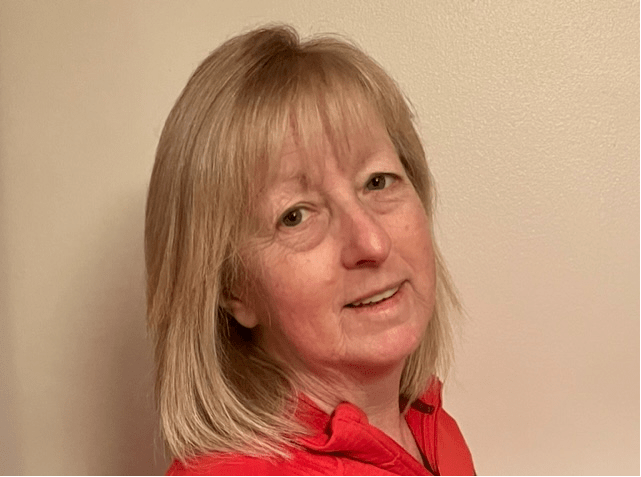
I don’t consider myself a “writer”. Can’t be. After all I have only managed to get one crime story published – and one swallow doesn’t make a summer. My debut crime novel, “Do Sleeping Dogs Lie?” is based in Omagh, my home town. My aim had been to take readers on a journey to that place, and introduce them to the resilient, friendly and funny people in the context of the post Troubles era. By having that novel published, the door of the Crime Cymru collective was opened just wide enough to let me squeeze my way in.
So, what next on this journey to be considered an author? Inspiration came from a historical crime course that I “attended” through Zoom, through Cardiff University and led by Crime Cymru’s own Katherine Stansfield. This started me thinking about a family story about events in 1922, during the Irish Civil War.
Northern Ireland is just over one hundred years old. It’s a country born out of conflict and division, a legacy we have managed to keep going one way or another. I was aware of a family story about my grandfather, Albert Yorke, that supposedly occurred right in the middle of the partition of the island into Northern Ireland and the Free State of Ireland.
My grandparents’ farm was in the townland of Urney, just outside the village of Clady. A townland is a term used throughout Ireland and is essentially an area of land outside of towns. The farm was bordered by the river Finn on the west side, which itself was the boundary between the counties of Tyrone and Donegal. The farm had been in the Perry ownership (my grandmother’s family) for generations.
In 1921 the boundary commission had a very difficult job. Where to draw a border between what was to be the Free State of Ireland and the new state of Northern Ireland? They were tasked with trying to satisfy the unionists who were in the majority in the six most northerly counties of Ireland, the proposed new Free State government of the remaining counties and the Irish Republican Army. The IRA had felt the republican “cause” had been sold out by the likes of Micheal Collins, as the new Free State would still be under British rule, a sort of devolved government. In the Urney townland, the boundary commission in their wisdom decided to use the River Finn to draw the line, thereby putting the farm on the front line of the border.
The story told by my mother was that my grandfather and one other local man, both Protestants, were kidnapped by the IRA at the beginning of 1922. Both became ill. The other man died, but Albert was taken to a convent in Donegal and was eventually released six months later. For the whole period of his incarceration, my grandmother, Olive, was instructed to leave food at the bridge over the River Finn in Clady which she hoped would be taken to Albert.
Typically, when I was younger, I didn’t ask about the details: why was he taken? Why was he released? – it never crossed my mind. Over time, with the inevitable passing of the older generation, there was no one who knew any further details. Indeed, the next generation, my nephews and sons, were even wondering if the story was true at all.
I knew I didn’t want to write a factual account of what happened, but I wanted to write a crime story within the context of the facts and difficulties experienced at that time by normal people just trying to get on with life. The personalities of those past characters would be based on the strengths and weaknesses of current family members. After all, the apple doesn’t fall far from the tree. But to get to the realities of that time, research had to be done.
My first contact was through my nephew who is a journalist with an Omagh based newspaper. He put me in contact with a local historian who informed me that there has been little or nothing written about the events in Clady around the beginning of 1922, but plenty going on further afield. I considered this to be good and bad news. Bad because he had no specific details but good as there would be no contradiction of my interpretation of events. However he told me a few facts that were of considerable interest.
In early 1922, the IRA had a plan to kidnap (or ‘lift’ as we tend to say in Northern Ireland) two hundred “prominent unionists” to have leverage over the British government. In the end they managed to lift one hundred.
The historian also told me about a so-called football team from Clones who travelled to Londonderry in early February 1922 on the pretext of playing a game with a local side. They were stopped on the way by the Constabulary, who found a number of guns and a map of Derry prison about their persons. Their intention had clearly been to release IRA prisoners from the jail.
In late February 1922, there was a riot in predominantly nationalist Clady, possibly caused by the influx of the dreaded B Specials, who, a few days before, had burnt a local merchant’s premises to the ground. The B Special were a type of reservist organisation brought in to support the police. They had a poor reputation as they were far from an impartial force.
Inter-religious tensions were building up all over Ireland, with riots in Londonderry and Belfast.
So, the picture that was coming clear was of a country in increasing turmoil in February 1922. This led to what is now known as the Irish Civil War, a gorilla-based war between the IRA, who wanted full independence from Britain, and the new Free State government, who thought they had got the best available deal.
But what of Albert? Was he a “prominent unionist”? Not according to my eldest sister, who had been born during the early part of the Second World War and lived her younger years with Albert and Olive. This was because our mother was in ATS and our father was in the 11th armoured division of the British army. By the way, if you are wondering about the age differences, I was what I think of as a delightful surprise when my parents were in their forties. My sister’s recollection of Albert was of a quiet, reserved but popular man, who was a church attender and had no affliation to any political party.
My next stop was the library in Strabane, the nearest town to Clady. The librarian pointed me in the direction of an ancient microfiche machine with instruction to “give it a bang on the side if the light goes out. That usually does the trick”. I was handed two boxes of microfiche of local papers from 1922 and started work.
First I checked the unionist based newspapers. Yes, in Northern Ireland we had and still have a tendency to “segregate” our newspapers to unionist and nationalist. I scanned from the beginning of the year to the end. No mention of a Mr Albert Yorke being kidnapped in Clady. Oh dear. Perhaps my sceptical nephews and sons were right.
I started on the nationalist papers, the ones which wrote glowingly of the IRA endeavours. Then I found it. The Strabane Weekly News was dated 11th February 1922.
Clady Men Taken Away
Mr J Baird, Clady Strabane, merchant, and A Yorke, manager of the Clady Creamery, were taken away at a late hour on Saturday night. It appears a motor car called on the two gentlemen, seized them and took them away to an unknown destination. No motive can be assigned to their disappearance, as both young men were highly popular in the district.
Mr Albert Yorke writes to his relatives from an unknown destination that he is well but does not know when he will be released.
I was instantly relieved. So it was true.
But then this little article started to generate more questions. A paper that delighted in telling of the successes of the IRA in attacks against the forces of the crown, seemed astonished that Mr Baird and Albert had been taken. And who knew that a motor car, something that would have been a rarity at that time in that area, had been used in the kidnapping? These questions were wonderful prompts for my quasi-crime fiction story based on the actual events.
But I have decided to give Olive the primary voice. She was the one who that had to carry on with managing the farm and caring for two small children (my mother and her brother) not knowing if, despite her leaving food every week, he would ever return. And in my version of events, it is she who is the investigator who solves the murder.
But there was still one question. After a gruelling six months, why was Albert released?
Then one of those historical stories popped up on BBC Northern Ireland news, on topics around the creation of NI one hundred years ago. It seems that, in September 1922, the Free State government (it didn’t become a republic until the 1940s) had decided enough was enough and decreed that anyone who was found in any way in action with the IRA would be hanged. It didn’t seem like a coincidence to me that that was the very month Albert was released.
Now I have all my ducks in a row. I have what I like to think of as factual “trig points” on which to formulate my story, the middle to be filled with my imagination, seasoned with, of course, a murder.
So, all I have to do is write the damn thing. Working on this new novel, maybe, just maybe, I might eventually be writer after all.

Gwyneth Steddy is originally from Omagh, Co Tyrone but has lived in Bridgend, South Wales for the last forty years. She has worked as an occupational therapist in social care for more years than she is willing to admit. Gwyneth hopes, through the medium of contemporary crime stories, to introduce the reader to West Tyrone, a beautiful, friendly, overlooked place, and the extraordinary people who live there. She examines how the past in that part of the world, continues to impact on the present.
In her free time she runs (slowly) and mountain bikes (even slower).
“Do Sleeping Dogs Lie?” won the inaugural Crime Cymru First Novel prize. It can be bought via Amazon or through the Publishers, Diamond Crime.
 Crime Cymru
Irish myself, and there was a family farm with grandparents, cattle, horses and even a jaunting cart so interested in this story. Sounds a good read. May I ask a question, also with Welsh connections so are there any lists of Welsh publishers? Whatever genre..Congratulations on this author.
LikeLike