In this week’s blog we get into the psychology of writing and symptoms such as imposter syndrome, and Crime Cymru’s Mary Grand suggests how to deal with them.
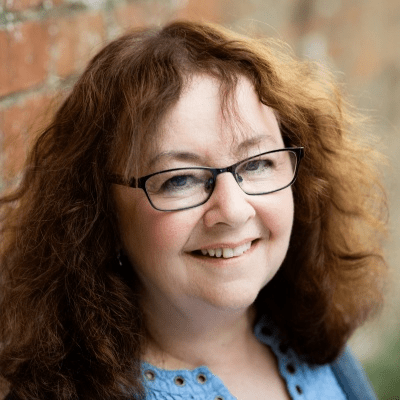
I am about to start my ninth novel. Having spent several weeks researching and plotting I am fast approaching that time when it is necessary to open my laptop and face the demon of the first blank page. It can’t be put off any longer. I must start writing that first draft and, I have to confess, the thought terrifies me.
What exactly is so intimidating about that first draft? After much thought I have discovered that my deepest, most paralysing fear when it comes to writing is the fear of failure. Talking and listening to other writers, I know I am not alone.
Fear of failure is at the heart of perfectionism. Now, perfectionism is not the desire to improve and develop as a writer or that aspiration to write the very best version of our story. These things are healthy, positive, and helps us grow as writers. Perfectionism on the other hand is stifling, negative: it paralyzes us.
As Brené Brown explains in her book, The Gifts of Imperfection, “There’s a significant difference between perfectionism and healthy striving or striving for excellence. Perfectionism is the belief that if we do things perfectly and look perfect, we can minimize or avoid the pain of blame, judgment, and shame.”
And so, for us as writers, perfectionism is the fear that if our work isn’t faultless, if we can’t write it easily and effortlessly, then we are not good enough and we will be judged a ‘bad writer’ or ‘not a real writer’ after all.
What are the worst effects of perfectionism and the fear of failure on a writer? Well, we can become scared, unproductive, frightened to write, to take risks. We may find ourselves constantly procrastinating, maybe endlessly researching, and even when we do manage to get a few words down, we may never be proud or satisfied with our writing. And so, the joy of writing is destroyed leaving us exhausted and frustrated.
Now, fortunately most of us do not have such extreme experiences, and we manage somehow to dig ourselves out of the morass and get down to writing. However, I did feel there should be some concrete advice out there and started to read around. These are a few ideas that I have found helpful.
- Be kind to yourself, talk to yourself as you would a close friend. “You can write, you have shown that, yes, you will make mistakes, but we can sort those out later. Everyone writes crappy first drafts. It’s going to be ok.’
- Work on silencing those critical voices in your head. One technique suggested by Anne Lamott in her book Bird by Bird is to isolate the voices and imagine each critic speaking as a mouse. Pick each up by the tail and drop them in a mason jar and put the lid on. (I personally have to add to this to take the jar outside and let the mice free in the woods – but that is just me!).
- Stop calling it a first draft. One suggestion I saw was to call it a zero draft, you could call it ‘a non-draft.’ The main thing is to persuade yourself that no one, not one other person, is going to read this initial draft.
- At this stage stop getting hung up on that scary first line, the hook. You do not have to nail this in your first draft. In fact, often you only really know that first line when you know the big story. For now, keep ploughing past it.
- You are allowed to make as many mistakes as you like at this stage. A mistake is not proof of your inadequacy. Mistakes are not the enemy. We can learn and grow through our mistakes.
- Remember why you started writing. Close the door, give yourself the luxury of forgetting everyone else, and write for the love of telling a great story well. Rediscover that joy and excitement you felt when you wrote your first story.
- Even great writers feel the fear- “If I waited for perfection, I would never write a word,” said Margaret Atwood. We are not alone.
And so, I am off to the next novel, to face that blank page. I’m going in.
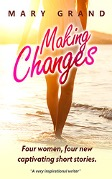
Mary lives on the Isle of Wight with her family. Before coming to the Island, Mary worked as a teacher of Deaf children in Hastings and Croydon. Mary grew up in Wales and her first few novels are set in Wales.
Mary began her writing career self-publishing three novels, and she is now published by Boldwood Books. To date she has had four novels published with them – The House Party, The Island, Good Neighbours and Death at Castle Cove. These are all murder mysteries set on the Isle of Wight.
Facebook: https://www.facebook.com/authormarygrand
Twitter: @authormaryg
Instagram: https://www.instagram.com/marygrandwriter/
Email: marygrand90@yahoo.co.uk
 Crime Cymru
I do like that. I’ve been where you are for three or four years. It gives me hope.
LikeLike
Just beginning my first draft and so dissatisfied but trying to tell myself it’s okay, you can go back and change it later. Thanks for the encouragement.
LikeLike