Something different again this week. It’s an “Eco thriller” from Crime Cymru’s Alison Layland. read on …

Topical storms
As we dust (or should that be dry?) ourselves off from the most recent storm in the UK – storm Debi, already the fourth Met Office-named storm of the 2023/24 autumn/winter season – I can’t help thinking of the storms and flooding that pervade my eco-thriller, Riverflow. Wondering when we will be hit by the next major storm, Elin, apart from marvelling at the coincidence that the next storm will share the name of one of the novel’s protagonists, I’m reminded of how the effects of climate change are coming upon us ever more quickly. The river Severn, on the banks of which the novel’s fictional village is located, has always flooded, but the events are increasingly severe and ever more frequent, with ‘once in 100 years’ events happening every few years. And yet, like Elin and Bede Sherwell in the novel, we still struggle to make our voices heard in calling for measures to combat climate change and mitigate its effects.

Some things have changed: one aspect of the novel is the characters’ involvement in anti-fracking protests. As I was writing the novel, back in 2018, fracking was still a very real prospect; as part of my research I went to a protest at the site at Preston New Road near Blackpool. Shortly after the novel’s publication there was a moratorium; the prospect was recently revived last year but is now dormant again, we hope for good. I remember thinking I’d rather see the back of this ecocidal practice than that my novel remains relevant. And yet now we are seeing licensing for new oil and gas exploration in the North Sea, when if we were to use the fossil fuels we have already extracted globally, this would take us over the 1.5° limit beyond which runaway climate change and its effects are far more likely.
But it’s not all about figures and politics. Fears and anxiety around protest and climate change, and the effects themselves – in this case, storms and flooding – make excellent, brooding material for a psychological thriller. Not only are the Sherwells drawn into conflict with neighbours over their beliefs, but their differences in opinion about how far to go when protesting open up cracks in their marriage and allow newcomer to the village, Sylvan, to come between them.
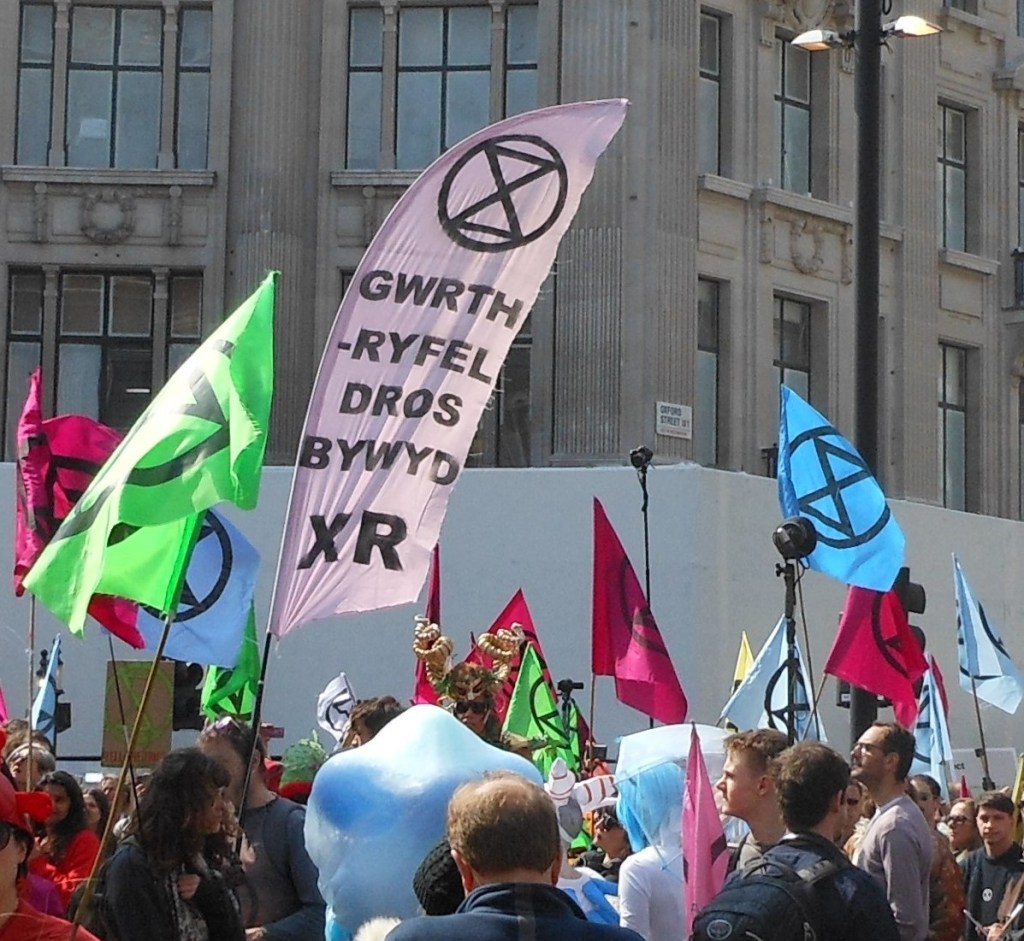
They are involved in a local protest group in the fictional village of Foxover. While editing the novel, between completing the manuscript and publication, Extinction Rebellion staged their first rebellion, in autumn 2018, occupying bridges in London. I suggested to my editor that it might be an idea to include references to it, but I was advised not to, since at the time, there was no knowing how long XR would last and whether they would have an effect. As it happens, it would have been fine – XR certainly did make a mark in 2019 and Elin and Bede would doubtless have been active members of a local group, probably even responsible for forming it, but the novel is fine without mention of it.
Sometimes, the more up-to-date you make your novel (e.g. use of slang, or reference to a topical issue such as this one), the more chance there is of it feeling dated sooner. Which just goes to show that a relevant background is important, but what makes or breaks a novel is always the story and characters.

Riverflow is published by Honno Press, and can be bought from your local bookshop or online at: https://uk.bookshop.org/books/riverflow/9781909983977%20,
amzn.to/3vAX94B or https://www.kobo.com/gb/en/ebook/riverflow.
Find out more about Alison Layland at her website www.alayland.uk or her Crime Cymru page
 Crime Cymru