This week we have a blog that is right up my street as Crime Cymru’s G J Williams explains the importance of good research ……
Writing historical crime – going wide, deep and detailed
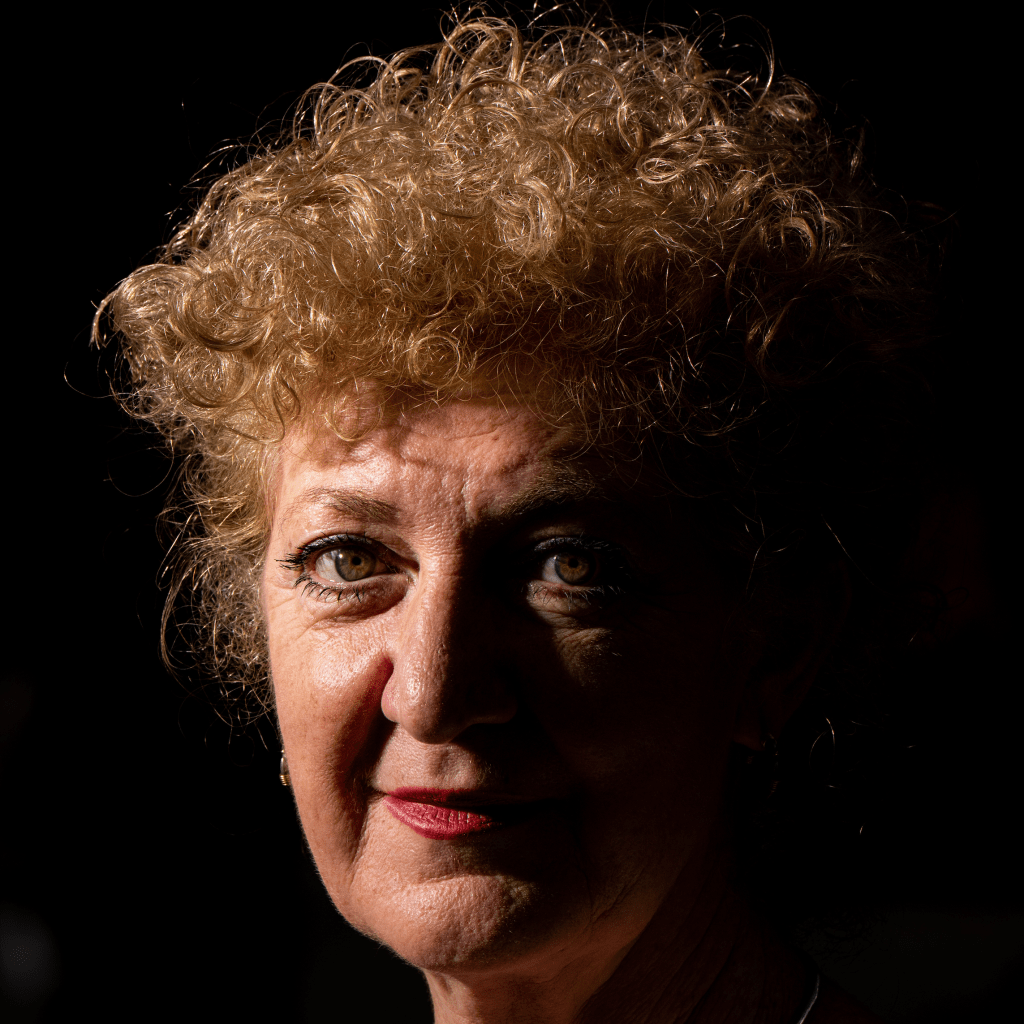
By G J Williams, author of The Conjuror’s Apprentice (Legend Press, published October 2023)

I have an over-arching formula for my medieval crime novels: Take real events and people then throw a few bodies into the middle to merge the real and imagined plots. I am, by profession, a psychologist and not a historian. Therefore, my writing is as much about educating myself as putting my imagination through a pen.
Readers of historical fiction are historically aware, well-read and have a keen eye for a mistake. Inaccuracy or ‘iffy’ twists on reality and time will irritate. My period is Tudor and so I benefit from a mass of source information. But, you have to get it right. So what do I do?
Getting the history right
It is essential to read the history of your period and read it thoroughly. Google is your starting place but is never enough. Many websites are inaccurate, and biographers contradict or have differing dates, so you need to research more widely. In my research, I source information through:
- Academic books
Ensure you read more than one author as they often disagree with each other and some will have more detail than others. Also, go to older work. It is tempting to pick up the most recent writing, but impressive historical research has been conducted for decades. Look in the reference sections and you will see how today’s academics are building on their tutor’s work. Then be sceptical rather than always accepting, as it is easy to be tripped up. One of my detective-duo is John Dee, a real person who was astronomer and advisor to Elizabeth I. He is a fascinating character and likely the most educated and intelligent of Elizabeth’s advisors, but history has turned him into a strange sorcerer and beloved of internet occultists. So, I read every academic book I could find about him, as well as the mass of writing on the internet, and built up his character from known facts before adding my imagination.
- Books which take a different slant
Since Victorian times history has been depicted according to the reigns of monarchs. There is less social history for us to understand life for ordinary people. But books such as The Time Travellers Guide to Medieval England (Dr Ian Mortimer, 2008), Medieval Lives (Terry Jones, 2004), and How to be a Tudor (Ruth Goodman, 2015) will take you beyond the politics into the sights, sounds, beliefs, food and smells in which your story is based.
- Visit the sites
If you really want to get into the shoes of your characters, try to walk where they walked, see what they saw. It gives a level of detail when writing a scene which cannot be obtained through a screen.
- Talk to experts
Most people who love their subject are more than willing to give good advice. In the last few years I have had coffee with an expert in medieval swearing, brilliant advice from the experts in the Royal Palaces (did you know that Elizabeth would never have had a wardrobe?), and amateur experts. A real character called Blanche Parry – or to use her name as she would have pronounced it Blanche ap Harri – comes to the fore in book two of the Tudor Rose Murders series and I learned 99% of my knowledge about her through Ruth Richardson, a passionate historian in Hereford who wrote Blanche Parry, Elizabeth’s Confidente. Never forget the apparently pernickety critics. They are rarely malicious, and often help you out.
- Read other fiction
Join in with the imagination of other writers. Most are well researched. So reading Judith Arnott on Mary I (A Heretic Wind) and Alison Weir on Anna of Kleve, gave me a feel for the psychology of people in my novels – and both those authors are extremely accurate in their history. The same goes for Elizabeth Norman and Tracy Borman, both of whom really understand the psychology of their subjects.
- On-line resources
There are too many to list, but research to find what best suits and mix amateur with academic. A few I find very accessible are: https://englishhistory.net/tudor and https://tudortimes.co.uk/. Never forget passionate podcasters such as Talking Tudors https://talkingtudors.podbean.com/ and Dr Kat Marchant who is a joy https://www.youtube.com/channel/UCMeDlpoE4TprIxdeJz97zzQ
Period detail
As for period detail, again you need to check and double check. It is all too easy to use words which would not be in use at the time, to describe clothes or furniture which did not exist and foods which were not eaten.
Another source of period detail is film. All too often the history is irritatingly mashed, but set designers are detail lovers, great researchers, and love to create things as they really were. If nothing else, you get a visual feast to feed your imagination.
Again, the experts who base themselves in historic places are a rich source of information and extremely generous. Historians, such as Owen Emmerson at Hever Castle, are a human mine of information, the student historians at Hampton Court can give you insights beyond any book; and you will often find amateur experts roaming the ground. Never be shy in approaching. They love to chat.
Writing historical fiction is a joy – every tap of the keyboard transports you to another world, another time and a rich tapestry of people, politics and power. But it takes hours of research, checking, questioning and adapting. To me, the challenge is ensuring that all my imagination and the story I want to tell can be fitted into reality and the timeline of real events. But when you have managed that and type ‘The End’ before a historical note which sets out all the reality behind the story, it is the best feeling.
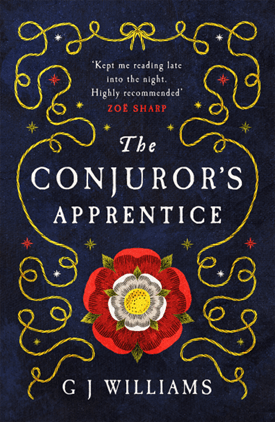
G. J. Williams is the author of The Conjuror’s Apprentice, the first in the Tudor Rose Murders Series. You can read blogs on the history and characters in her books through her website. www.gjwilliamsauthor.com
As a child G.J. Williams read and wrote stories every day, encouraged by her teacher, Mr Gerry Williams who was the first to tell her to be a writer. 50 years later, he was at the launch of her first novel.
After gaining a Ph.D in Psychology her career has focussed on developing lawyers and executives. Writing had become sometime hobby until it re-emerged as a passion fifteen years ago. Her love of historical crime started when she read C J Sansom’s Dissolution and she moved to writing what she loves. Now she combines her interests of Wales, history, and psychology to create characters and intrigue within real historical settings and events.
She lives between Somerset and London and her interests range from walking beaches and hills, travel, sailing her beloved boat, going on tall ship holidays, and visiting old buildings and historical sites.
Links
Instagram – GJWilliams92
X – GJWilliams92
 Crime Cymru