This week we have a blog from Crime Cymru’s globetrotting Cathy Ace, who tells us of the importance of travel and meeting new people when devising her wonderful novels

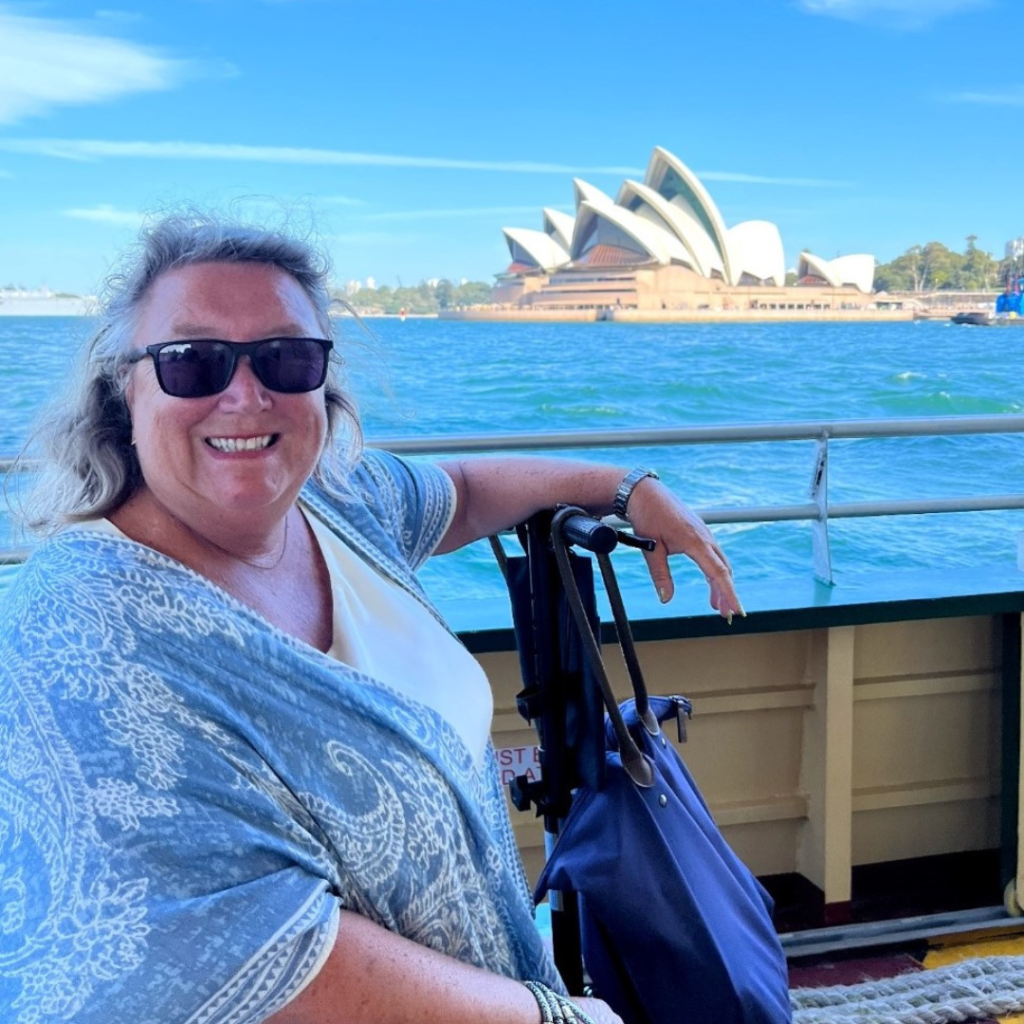
If you ask anyone who knows me, they’ll tell you that I travel a great deal. The peripatetic lifestyle isn’t new to me, something it’s easy for every reader of my work to guess. For example, each of my Cait Morgan Mysteries is set in a different location; I have lived or worked in all of them, or have spent at least a month of my life there, at some point.
My travels have very much inspired my writing…but I still need to invent locations, too. Why? Well, if a murder is going to happen (and it always does in my books), I don’t want it to be connected to a real dwelling or business, even if that invented specific location is positioned within a real city or area.
A good example of this is THE CORPSE WITH THE OPAL FINGERS – the thirteenth book featuring my Welsh Canadian professor of criminal psychology, Cait Morgan (part of the first chapter follows below): the specifics of all the locations in the book are invented, while the critically important Australian settings are real.
And what about the people? Are they ‘real’? Well, every author will tell you that their characters are real to them, but, in this instance, ‘The Mob’ was inspired by a real group of Australians with whom I was lucky enough to spend a couple of weeks. However, I have changed the names – and the personalities – of all the folks I met, to protect the innocent!
Down Under
“I never thought I’d see this for myself,” said Bud quietly. “Not in my wildest dreams.”
The sky was aflame above Sydney’s iconic opera house – the perfect sunset. Which was just as well, given that we were on a sunset dinner cruise.
I hugged my husband tight, happy that we could share the wonderful moment. “I’m sure we’ll make it to Siân’s home in Perth one day, but with her and Todd coming here for his annual mining conference, and us being able to make it over from Canada, you’re right…this trip is special in so many ways.”
As though my mention of her name had conjured her into existence, my sister was suddenly at my side, looking anxious. “We’ll be heading back to the dock at Barangaroo soon,” she announced. “Do we have a plan for when we get off?”
I didn’t want the magic of the evening to end, so replied, “Don’t know…oh look, what’s going on over there?” I hoped Siân would be distracted enough to leave me and Bud alone.
My sister followed my gaze. “That Mob from the Kimberley are at it again – the ones who build roads through the Bush and the Outback for mining companies. They’re settling in for a few yarns, I’d guess. You’ve bumped into some of them earlier during the conference, right?”
I nodded. “Hard to miss, really, aren’t they?” My sister rolled her eyes in agreement. The group of about twenty men who were rambunctious at best, and rowdy at worst, had become a bit of an item at the annual get-together, making their presence felt at every gathering – and not just because of their matching corporate shirts, which were an eye-watering yellow with a massive red and black S & S logo on the back. None of them seemed capable of doing anything but shouting, and they all shared an inexhaustible love of beer, it seemed.
“I was ten years old when I found a murder weapon,” said a gravelly voice from somewhere within the crowd.
My curiosity kicked in immediately, of course, and I craned my neck to try to spot who’d spoken.
There was a cheer, a couple of shouts of “Good on ya, mate”, and the canary-shirted men began to congregate, with expectant faces.
Bud smiled at me indulgently and said, “That’s an opening line it’s too good to ignore, right?”
I grinned at my always understanding husband as we gravitated toward the huddle that was gathering around a few tables, which were already littered with empty bottles and glasses.
A voice called from the edge of the crowd, “How d’you find this so-called murder weapon, Lennie, mate?”
Lennie Orkins – a man I’d already encountered a few times during our days in Sydney – leaned in, his weathered face and raisin eyes glowing with the promise of a tale that would be worth hearing. His colleagues shifted closer on the pastel-orange banquet seats, then a couple gallantly rose so Bud and I could sit within the circle.
Lennie scratched his face thoughtfully, then began, “It was summer, and all the local waterholes had dried up – except one, the biggest, and deepest. When the water was high, no one could ever reach the bottom. That was the dare, see? Get to the bottom and pick up a stone to prove you got there. Like I said, no one ever managed it. But with the levels so low? I reckoned I could do it. So I jumped from an outcrop that hung over the water, got all the way down, and made a grab for…anything, really. Came up with a big stick in my hand, or so I thought. Turned out to be a rifle. It proved I’d got to the bottom, see? And, on top of that, I was a hero because I’d found a gun. Huge excitement for a bunch of young fellas, as you might imagine. I washed it off and took it home with me. Handed it to my grandad, who gave me a pat on the head for my trouble. I didn’t find out it was a murder weapon until about twenty years later, when he died. Turned out he’d kept it rolled in a blanket in a tin trunk at the foot of his bed all that time. I was clearing out his place after he’d gone, and there it was. I handed it in at the local cop shop and thought that would be the end of it. Then it turns out they’d been looking for it for all that time.”
He paused and drank almost half a bottle of beer in one draft, with many in his audience matching him gulp for gulp.
“Who’d the gun killed, mate?” asked someone.
“The Girl with the Opal Fingers,” said Lennie ominously.
There were a few gasps of disbelief, and several knowing nods.
“You’re kidding,” said someone just behind me.
I turned to see who’d spoken, but my view was blocked by a young man I’d already met a few times. Neal was the “baby” of The Mob, the son of Big Stan, who owned the company they all worked for. In his mid-twenties, Neal had swagger, good looks, and a winning crooked smile, which he’d used – twice – to get in front of me at the breakfast buffet at the conference hotel.
“Bloody oath,” said Lennie, sounding wounded that someone thought his claim unlikely.
Bud and I stared at each other, round-eyed and clueless.
Neal stage-whispered, “She was a kid who got shot, out in the Bush, a long time back. Before I was born. Sad story. Had this weird ability – like magic, they said. You could give her a map and she could point to exactly where you should dig to find opals. Just that, nothing else. Couldn’t do it for gold, or coal, or salt…just opals. Not that they aren’t worth digging for, of course. Especially the black ones. She made a lot of money for a lot of people, I heard.”
“She was almost twenty when she died, son, not a kid really.” Big Stan leaned his great bulk toward us, then addressed the group as a whole. “A tragedy. They never got the bloke who did it until Lennie found the rifle. Then she finally got justice.”
“Yeah,” agreed Lennie. “All those years my grandfather had it tucked away. Cops came to his place three or four times after I’d handed it in. Chapter and verse, they wanted. I’ve got a pretty good memory, but I couldn’t give them exact dates or anything. Like I said, I was only ten when I found it. They reckoned the rifle must have been in that waterhole for at least a year before I pulled it up. They matched the bullets they’d…um…you know…found, and they easily worked out who it belonged to. And that was that.”
A man I knew only as Dan piped up, “It was one of those stories I always told my young ’uns when they was growing up. Everyone said her father had killed her because she wouldn’t do what he told her to. Not that I wanted my lot to think I’d shoot ’em if they didn’t listen to me – but it gets to a point where you’ve got to get their attention somehow or other.”
“You should know, mate, you’ve got enough of ’em,” came a chuckling reply from somewhere behind me.
Big Stan called, “And Dan’s only got himself to blame for that, right fellas?” Raucous laughter followed. He added, “But it turned out it wasn’t her father who did it…the bloke she refused to work for shot her down, right?”
Our storyteller, Lennie, nodded sagely. “Yeah. It was his rifle – big, old, double-barrelled thing, it was – and me finding it again sewed it up for the cops. Thanks to my grandad, it took them far too long, but they got him in the end.”
It looked to me as though Big Stan was about to comment, but a voice cut in, “Good yarn, Lennie – but I can go one better.”
The man who’d called out was standing right behind where Lennie was seated; he was about twice his breadth, and squat, with a head that reminded me of a bulldog.
Lennie chuckled. “Go on then – you’re up next, Shorty. Can’t help yourself, can ya, mate? Got to outdo everyone, right?”
Shorty cleared his throat. “I didn’t just find a murder weapon – even if it was used in one of the most infamous murders ever – nah…I saw an actual murder happen. Right in front of me.”
This announcement brought a round of applause and lots of hooting; I felt my right eyebrow shoot up, which led Big Stan to observe, smiling, “All in good humor, Cait – don’t go getting your knickers in a twist. Yarning’s a harmless way for us to have our fun, right men?” He waved an arm. “Get on with it, Shorty, mate. Lennie’s right, you can’t let anyone spin a yarn without having a better one, can you? But he’s good ’cause he gets to the point. Take a lesson from him.”
Shorty rearranged his shoulders, looking somewhat slighted, then stuck out his broad chin and said, “It was summer in Alice Springs, just before Christmas, a few years back.” The man had decided to adopt a dramatic tone, and stepped forward, waving his arms above Lennie’s head.
Once he was certain he was the center of attention, Shorty continued ominously, “It was too hot to want to do anything but suck on a beer. The arvo this all happened, there was a storm on the way – you could feel it on your skin. But it wouldn’t break. You know what I mean? The sort of weather only the flies enjoy. The boozer was full, someone knocked over a beer, and it all kicked off from that. Fists flew, then a knife came out, and it got serious, fast. I saw a bloke get stabbed, and I saw who did it. Wished I hadn’t. Brutal. Nasty. The bloke on the floor didn’t get up, and we’re all backing off, but there was this kid who used to hang around the pub who had a few kangaroos loose in the top paddock, you know? The only one stupid enough to pick up the knife that had been dropped by the mongrel who’d stuck it in in the first place. So there’s this bloke on the floor, dying, and the kid’s just standing there – the knife in his hand – and, of course, he got grabbed. By everyone. Thought they’d tear him apart, I did. Now, as you all know, I’m not one to dob a man in, but I couldn’t say nothing, could I? So I shouted that I’d seen who’d really done the stabbing, and eventually they let the kid go. He wasn’t too crook, but it could have gone real bad for him. Then the boys in blue turn up, and cart off the scumbag who’d really done it. Nasty piece of work, he was. Everyone knew it. Always just on a simmer, ready to boil over. The town was glad to see the back of him. Me too, to be honest. For some reason he seemed to think we was mates, though I’d cross the street to avoid him. Of course, they drag me down the cop shop too, to swear to what I’d seen. Had to do it. Too many people had heard me speak up.”
“Is that even really murder?” Neal sounded skeptical.
Shorty replied, “I think the family of the dead bloke reckoned it was. Besides, even if you call it manslaughter, or something else fancy, the bloke’s still dead. Anyway, I had to stand up in court and say I’d seen who’d stuck the knife in. Ricky ‘Carver’ Richards. And he wasn’t called ‘Carver’ because he whittled wood.”
A few colorful comments were shouted about Shorty having to wear a suit to go to court, and then more followed about how difficult it must have been for him to find one that would fit.
“I can do even better than that.”
Heads turned toward the only other twenty-something in the group; his slight figure was hovering to one side of the main huddle. I knew his name was Ditch, and I’d felt sorry for him on more than one occasion as we’d attended various functions; he’d always looked uncomfortable, and – other than Neal – no one took much notice of him, until they needed him to fetch beers…which was why I’d heard his name called out so often.
Neal said, “Go on then, Ditch, tell us. What?”
Ditch didn’t raise his eyes as he spoke quietly, “I know about someone getting away with murder – because no one even knew it was one.”
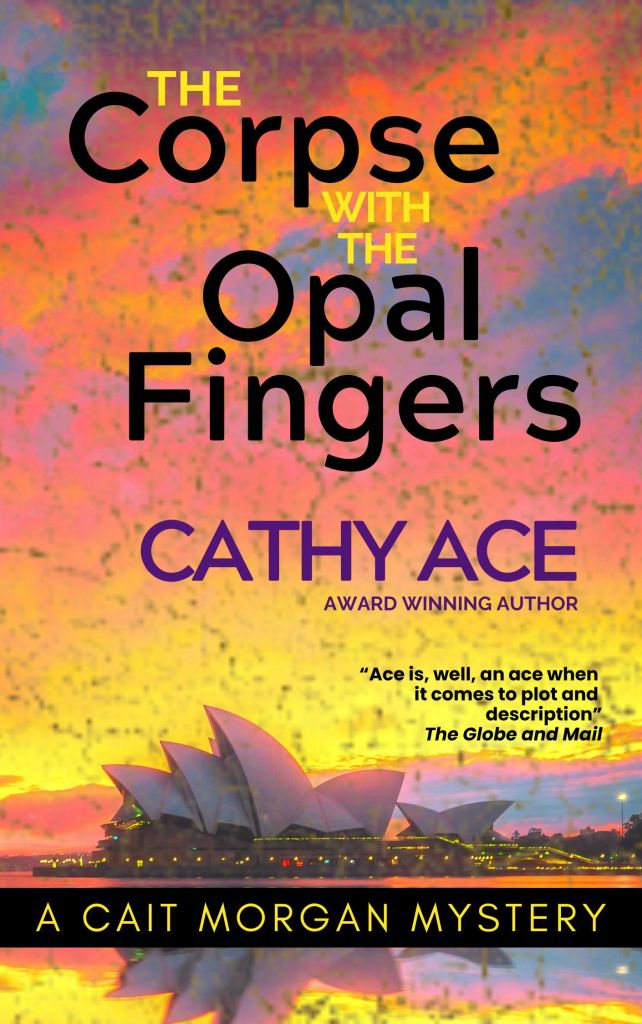
If you want to find out how these three murderous tales reach out across the years to become all-too real, and dangerous, for Cait and her family, you can find out more here: https://www.cathyace.com/cait-morgan-mysteries
Cathy Ace was born and raised in Swansea, Wales, and migrated to Canada aged 40. Having traveled the world (for business and pleasure) for decades, Cathy employs her knowledge of the cultures, history, art, and food she encountered in the Cait Morgan Mysteries – traditional whodunits featuring a globetrotting Welsh Canadian professor of criminal psychology. These books have been optioned by Free@LastTV (Agatha Raisin). Ace also writes the #1 amazon bestselling WISE Enquiries Agency Mysteries, featuring four female PIs (one is Welsh, one Irish, one Scottish, one English). They tackle quirky, cosy cases from a Welsh stately home in the rolling countryside of the Wye Valley. Cathy now lives on five rural acres in British Columbia, where she works full-time as an author, and enjoys her other great passion – gardening. She’s been shortlisted for the prestigious Canadian Bony Blithe Award three times, winning once, has won IPPY and IBA Awards, and her work’s been shortlisted twice for Crime Writers of Canada Awards of Excellence, and twice for Crime Fiction Lover’s Best Indie Novel. She’s a Past Chair of Crime Writers of Canada, and a proud member of Crime Cymru.
 Crime Cymru