How I Write: Cal Smyth
Passion, Perseverance, Positivity: A Motto for Life and Writing
(Plus a few Tips on Plot & Structure)

Pursue Your Muse
Two people falling in love face a dual mission: They must prevent singularity occurring by navigating the levels of a tower where tech corporations oversee human behaviour. But with The Dark Triad blocking their every move, will they be undone by their own flaws? That’s how ideas started to form for my latest novel, the second in a trilogy of romantic thrillers.
Who is the muse for this story? Is it the two protagonists from Virtuality (the first novel in the trilogy), their needs and wants unresolved as I still hear their voices? Is it the psychologist who told me about The Dark Triad, knowing that the term would appeal to me? Or is it my own mind, reimagining the term as characters with psychological kung-fu traits that reflect personality flaws of narcissism, psychopathy and Machiavellianism?

Your muse doesn’t have to be a Greek Goddess appearing as an apparition and providing creative inspiration (unless you’re lucky), but something should drive your desire to write. Maybe it’s the need to understand the dark side of personalities within us all. Maybe it’s anger at the wealthy profiting from the expense of others’ misery. Or maybe it’s the lure of an irresistible mystery. Whatever it is, pursue your muse with passion.
Plot It Out
Ok, you’ve got an idea, but what are you going to do with it? One of the biggest things I learnt from screenwriting is how to structure a plot. Every story needs a beginning, a middle, and an end, although as the film-maker Jean Luc Goddard said, ‘not necessarily in that order’.
You can use index cards on a note board, digital blocks on your laptop, or whatever works. As I plotted out Singularity this summer, I cut up squares of paper, mapping and re-mapping fifty scenes of white. For me, each scene is a chapter. It’s marked with a heading, the characters involved and one line about what they are trying to do.
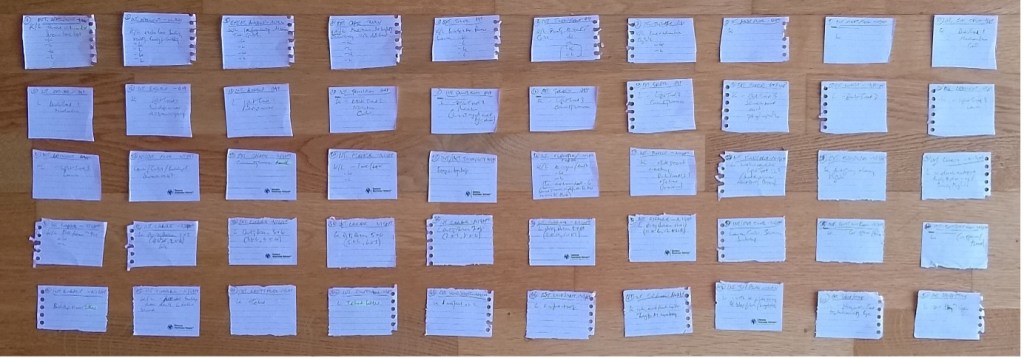
When I first ran creative writing courses, I was given advice by the Welsh historian and novelist Phil Carradice. He broke down the essentials of storytelling into the three Ps: People, place, and problem. When I run workshops, I call it character, setting, and conflict. And it’s the third element which is vital for fiction and screenwriting, especially in the world of crime.
You might have the most interesting characters and a fantastic setting, but without conflict, there’s no story. By plotting it out, you can see where and when characters face obstacles that they need to overcome. If there is no hook early on, no inciting incident to galvanize the characters, or no antagonistic forces throughout, then you need to re-plot.
Get It Down
You’re excited by your idea and it’s all plotted out. Time to get writing. When I’m plotting the story out, I probably look a bit like a madman, either staring at my illegible notes or murmuring thoughts out loud. With the actual writing, it becomes a full-on obsession.
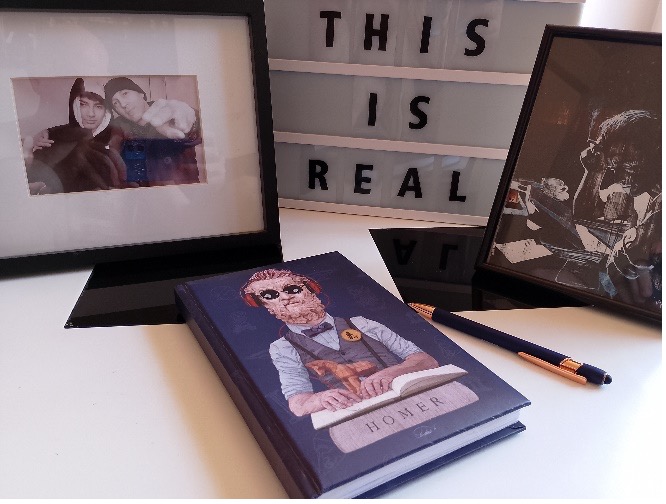
I’m old school and my first draft is hand-written, scrawled at fast pace in notebook after notebook as I get the story down on paper. I’ve got the plot spread out so that I can refer to that and my phone is at hand for online research or a call to bounce off ideas, but mostly I’m just completely immersed in the writing itself, ready to improvise as ideas come to mind.
In terms of style, I’ve always adhered to ‘less is more’ rather than over-describing, but over the years, I’ve also learnt to convey more emotional depth of characters. I want a reader to be hooked and turn the pages but also to empathize with the character journeys. And of course, other crime fiction novelists have influenced my writing – from Elmore Leonard to Don Winslow.
When I first read Winslow’s The Cartel, just the first few pages gave me goosebumps as he listed all the journalists who had been murdered in Mexico during the time it took for him to write the book. And with his final novel, City in Ruins, his acknowledgements brought tears to my eyes when he wrote that being his son’s father ‘has been my best and happiest work’.
We all have our own way and style of writing. After I handwrite each chapter, my next step is to type it up. This is my first edit, making changes as the story moves from paper to screen. And after the whole novel is typed up, that’s when the hard work starts.
Leave Your Ego at the Door
As Hemmingway said, ‘the only kind of writing is rewriting’. You always need feedback and you have to be able to take it onboard without your ego getting in the way. With my ‘Balkan Noir’ novels, the poet Carole Satyamurti was the first person I would turn to. We wrote in different genres, but her generosity, knowledge and thoughtful insight was always a huge help – often with her indicating when I should tone down the sex and violence.
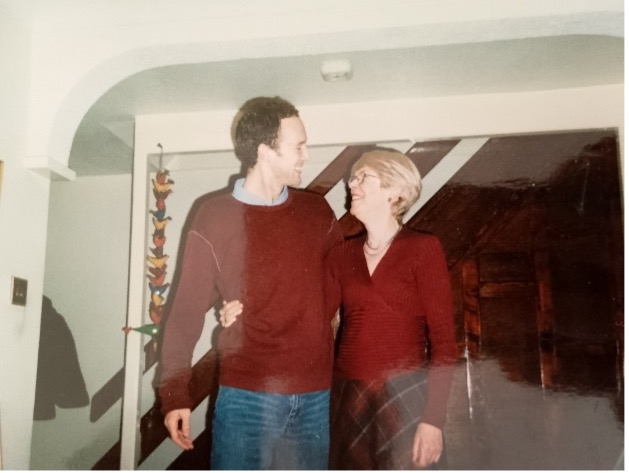
Carole died in 2019, much loved and missed. With Virtuality, I turned to three people, including Carole’s daughter, the lawyer Emma Satyamurti. We’ve been friends since we were sixteen, two outsiders at a family gathering and bonding as we talked about Dostoevsky and death. Emma’s feedback on the initial draft of Virtuality was vital in deepening the story and characters.
As a journalist and writer, Anne-Marie Lopez was spot on in reminding me of the basics of storytelling. Over the years, I’ve taught students about the need to show, not tell and the importance of creating inner conflict for characters. But it can be easy to forget these things in your own writing. As a psychologist and writer, Rena Gatzounis provided really useful analysis in going deeper into the character journeys. We joked about it being a psychological onion, but Rena made me peel off more layers.
Whoever you get to give you feedback, you need another pair of eyes. It’s not always easy to see your own flaws. And by leaving your ego aside, your writing will only get better.
Get It Out There
So, you’ve been inspired, you’ve plotted out a captivating story, you’ve written and re-written it. Now, how do you get it out in the world? Getting published by a major publisher isn’t easy, but it’s also never been easier to get your work to readers.
If you’re looking for a big-name publisher, you need a literary agent. And to get an agent, you probably need some kind of connection. But there are lots of networking opportunities where you can pitch to agents, like at Bristol Crime Fest. This is where I once pitched a psychological thriller. I could see that the panel of agents weren’t that impressed, so I quickly switched to telling them about another idea, using my experience of living in Belgrade during the nineties. The agents where suddenly interested. When I wrote The Balkan Route, it didn’t get picked up by one of those agents, but it did get published by Fahrenheit Press.
As with the film and TV industry in the UK, publishing is predominantly run by people from wealthy backgrounds. But there are some brilliant organizations and networks where writers from all backgrounds support each other, like Crime Cymru. And there are other ways to get your novels published, from independent publishers to self-publishing.
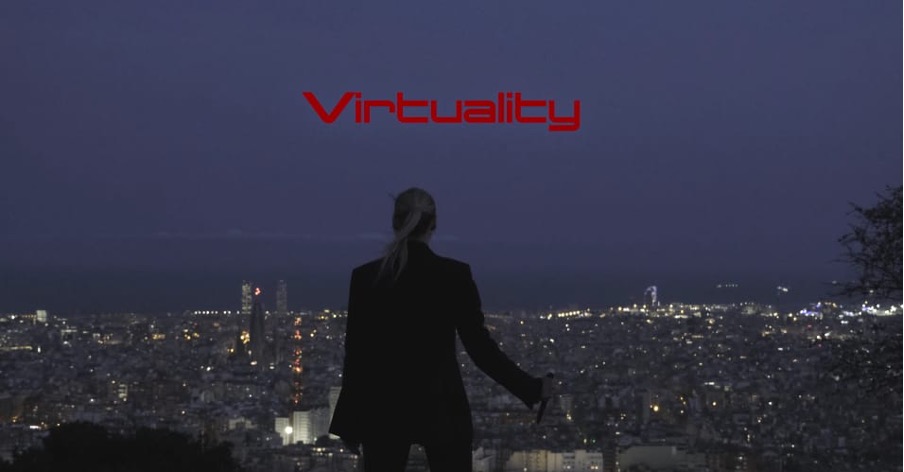
Passion. Perseverance. Positivity. That’s my three Ps. While I’m writing the second novel in my trilogy, I’ve also co-founded Diigima to create videos, including the trailer for Virtuality. I don’t know if it will help the novel become a bestseller, but I know that I have to write and be creative. It doesn’t mean there aren’t dark times to navigate in life, but all we can do is give it our best shot.
 Crime Cymru