Why We Care, by Mary Grand.
When I moved from writing women’s fiction to crime, I became totally obsessed with plot. I walked miles, my mind full of suspects, clues, twists, and turns.
However, one thing I quickly learned was that even in crime, plot must know its place. While plot and pacing are the pulse of a story, something more important is at its heart – and that is character. It is character that seizes the attention of the reader and compels them to engage. Character is why your reader cares.
“A cracking plot is important, particularly in a crime novel, but it is not what tends to make a novel addictive. For unputdownability, you’re better off considering … character.”
—Paula Hawkins
And of course, one of the most important people in any crime novel will be the main character, the protagonist, the detective.
That is why so often detective books are referenced by the detective– have you read this Sherlock Holmes…Miss Marple… Vera…Karen Pirie…?
With this in mind I thought I’d share a few tips I’ve picked up along the way about the development of the main character in a story and how to keep the reader engaged with them.
1.Creating or meeting our main character is a bit like meeting a stranger at a party. We notice appearance, voice, name. And so, how much of this does the reader need to know? Stephen King suggests we share ’just enough.’ Not very specific, but for all that, I find asking myself ‘is this just enough’ surprisingly helpful!
2.Backstory – the writer may well need to know a lot more than the reader. The past drives your character, but it must be shared carefully. Steven King (again!) said: ‘The most important things to remember about back story are that (a) everyone has a history and (b) most of it isn’t very interesting.’
3.There are many ways you, as a writer, can get to know your main character better. I used to think I had to complete those long lists, of things like, what a character eats for breakfast- to be honest I would just write anything to get through the damn things.
More interesting to me are the deeper questions. For example, The Proust Questionnaire asks of the character, ‘What do they consider an overstated virtue.’ Anne Lamott, writer of Bird by Bird, asks, ‘What would be the first thing they stopped doing if they only had 6 months to live?’ ‘How would your character describe themselves to a friend before and after a few drinks?’
Gillian Flyn for Gone Girl wrote her main characters iPod playlists, and what they watched on Netflix.
4.No one wants a character that is perfect. Give your character a flaw, (maybe more than one!), This will be something your reader can see, maybe relate to- lack of self-confidence, anger, drink. They read to see how this affects the character, how they deal with it.
5.Give your character a need, a lesson to be learned from the past. Jessica Brody calls this ‘a shard of glass,’ something that has scarred over. This will be the inner journey of your character, the soul of your story.
6.Place your character in jeopardy. Keep putting them in difficult situations. This leads to another important point- make your character proactive. They need to act, not always be reacting. They must be part of this process of healing.
7.Discover their greatest fear and use it. Fear is a primal motivator. Don’t run from it, face it, use it.
8.Make your character surprising. E M Forster says a rounded character is one ‘capable of surprising in a convincing way.’ We learn most about a character by what he does. Look for unpredictability.
9.Think about how your character interacts with others, their close friends, adversaries, and acquaintances. How they respond to them, and how these people see them will all reveal new things about our character.
10.Create a character arc. Your character will react, be changed by their experiences. (Although not necessarily become a better person!).
Maya Angelou famously stated, “I’ve learned that people will forget what you said, people will forget what you did, but people will never forget how you made them feel.”
I think this has parallels in our writing. The reader may forget plot, the setting, even who the killer turned out to be. However, in a really good book they will remember characters and how those people made them feel.
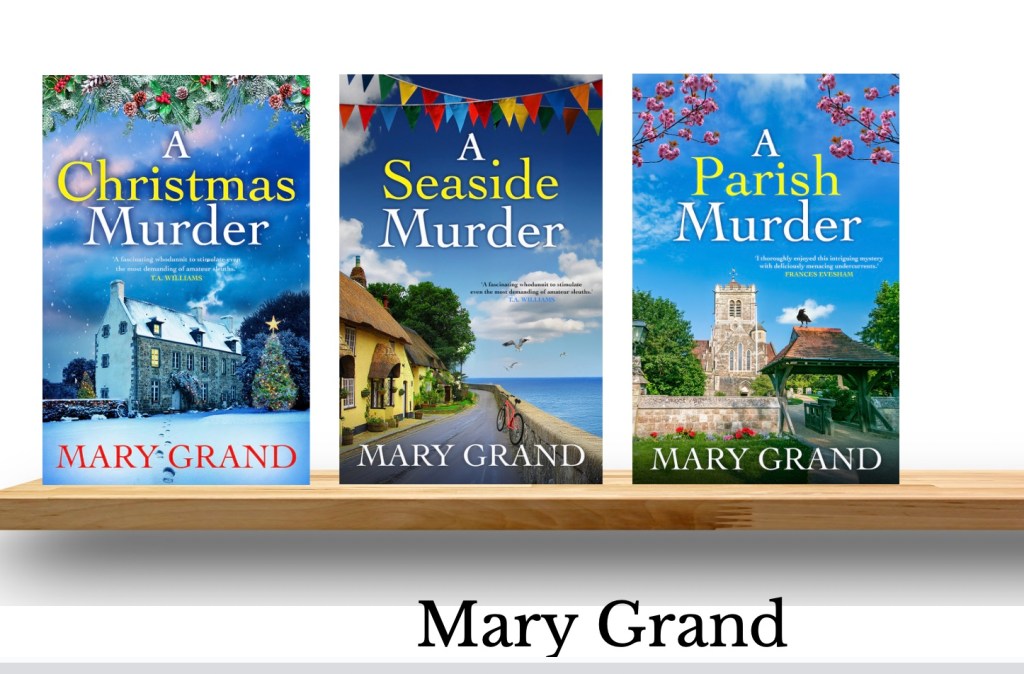
You can read more about Mary Grand and find all her socials by clicking here.
Facebook: https://www.facebook.com/authormarygrand
BlueSky @authormaryg.bsky.social https://bsky.app/profile/authormaryg.bsky.social
Instagram : https://www.instagram.com/marygrandwriter/
Email: marygrand90@yahoo.co.uk
Website – https://marygrand.net/
 Crime Cymru